In case any of the regular visitors to this forum are wondering "what has electronics got to do with MUD games?" - then this is my response ...
Apart from the obvious fact that PCs (and Macs etc.) are basically sophisticated electronic gadgets, I have been experimenting recently with making an RPG game "on a chip" (or a least, a few chips). This is the prototype:

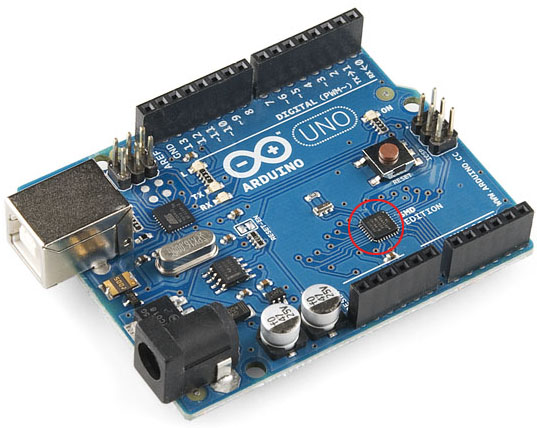
The basic idea is that the entire game is on an ATmega328P microprocessor (visible above but not very clearly, in the top left corner).
This particular chip has 32 Kb of "firmware" (with 512 bytes used for the bootloader). It also has 2 Kb of SRAM and 1 Kb of EEPROM. The firmware RAM is unchanged even when powered off, so you can always just turn it on and play. The SRAM is your volatile RAM for calculations (eg. combat calculations) and the EEPROM can be changed by the program to save stuff between power-off sessions. For example, the EEPROM is used to remember which room you were in.
As you can see from the photo, there is a 4x20 character LCD display to show where you are, with 3 buttons underneath (like a mobile phone) which will have different functionality depending on the circumstances. There is also a "directional keypad" on the right which lets you go north, south etc.
In these modern times when computers are becoming more and more complex (what with DLLs, operating systems which require a gigabyte of memory, viruses, etc.) it is a bit of a refreshing change to make a game that fits entirely into 32 Kb of memory.
Programming is in C++, and changes can be quickly downloaded via the USB cable you see in the photo. Once downloaded the whole thing can be powered from a 9v battery.
Apart from the obvious fact that PCs (and Macs etc.) are basically sophisticated electronic gadgets, I have been experimenting recently with making an RPG game "on a chip" (or a least, a few chips). This is the prototype:
The basic idea is that the entire game is on an ATmega328P microprocessor (visible above but not very clearly, in the top left corner).
This particular chip has 32 Kb of "firmware" (with 512 bytes used for the bootloader). It also has 2 Kb of SRAM and 1 Kb of EEPROM. The firmware RAM is unchanged even when powered off, so you can always just turn it on and play. The SRAM is your volatile RAM for calculations (eg. combat calculations) and the EEPROM can be changed by the program to save stuff between power-off sessions. For example, the EEPROM is used to remember which room you were in.
As you can see from the photo, there is a 4x20 character LCD display to show where you are, with 3 buttons underneath (like a mobile phone) which will have different functionality depending on the circumstances. There is also a "directional keypad" on the right which lets you go north, south etc.
In these modern times when computers are becoming more and more complex (what with DLLs, operating systems which require a gigabyte of memory, viruses, etc.) it is a bit of a refreshing change to make a game that fits entirely into 32 Kb of memory.
Programming is in C++, and changes can be quickly downloaded via the USB cable you see in the photo. Once downloaded the whole thing can be powered from a 9v battery.